Exchange Rates Graph
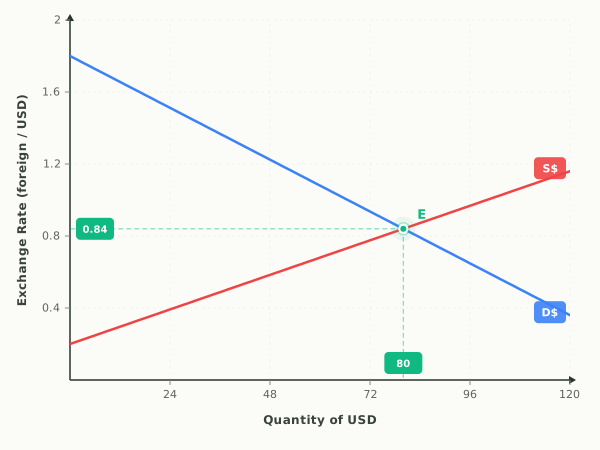
This sandbox is the foreign exchange market for one currency, the US dollar. Demand for dollars (blue, D$) comes from foreigners who need dollars to buy US goods, assets, or to invest here; supply of dollars (red, S$) comes from Americans exchanging dollars for foreign currency to buy imports or invest abroad. The vertical axis is the exchange rate measured as foreign currency per dollar, so a higher point means each dollar buys more.
Foreign exchange markets, currency appreciation, and depreciation.
Think you know when each curve moves? Try the draw-the-graph FRQ drills and get graded on it.
Teaching AP Econ? Assign a graded exchange rates activity to your class, auto-graded, scores in your gradebook.
Run it as a class activity: Exchange Rates Classroom Activities for AP Macroeconomics
What this graph shows
Where demand and supply cross sets the equilibrium exchange rate. When the rate rises, the dollar appreciates; when it falls, the dollar depreciates. You shift the curves to model events like higher US interest rates, a change in American tastes for imports, or foreign investment flows, and the equilibrium exchange rate moves accordingly. Remember that one currency appreciating always means the other depreciates.
How to read it
Read the exchange rate off the vertical axis (foreign currency per dollar) and the quantity of dollars traded off the horizontal. A rightward shift of dollar demand or a leftward shift of dollar supply pushes the rate up, so the dollar appreciates. A leftward shift of demand or a rightward shift of supply pushes the rate down, so the dollar depreciates. The live readout shows the current rate and quantity, and the Movement Along Curve tool lets you pick a rate off equilibrium to see the resulting shortage or surplus of dollars.
Three things to try
- Shift dollar demand right (D$) to simulate rising US interest rates attracting foreign investors, and confirm the exchange rate climbs, meaning the dollar appreciates.
- Shift dollar supply right (S$) to model Americans buying more imports and selling dollars, then watch the rate fall, showing a dollar depreciation.
- Turn on Movement Along Curve and set the rate well above equilibrium to reveal a surplus of dollars, illustrating why an overvalued currency cannot hold without intervention.
Common questions
What is the difference between appreciation and depreciation?
Appreciation means a currency gains value, so each unit buys more foreign currency (the exchange rate on this graph rises). Depreciation means it loses value and buys less foreign currency (the rate falls). On this graph the dollar appreciates as the equilibrium moves up and depreciates as it moves down.
Why do higher US interest rates make the dollar appreciate?
Higher US interest rates attract foreign investors who want to earn that return, so they demand more dollars to buy US assets. That rightward shift in dollar demand raises the equilibrium exchange rate, appreciating the dollar.
If the dollar appreciates, what happens to the foreign currency?
Exchange rates are always relative, so if the dollar appreciates against a foreign currency, that foreign currency depreciates against the dollar by the same movement. The two currencies sit on opposite sides of every trade.
Watch a shock move this graph, step by step
- US Interest Rates Rise: The Dollar AppreciatesHigher US interest rates pull in foreign investors, raising demand for dollars and appreciating the dollar.
- Higher US Inflation: The Dollar DepreciatesHigher US inflation pushes Americans toward foreign goods, increasing the supply of dollars and depreciating the dollar.
- Foreign Tastes Turn From US Goods: The Dollar DepreciatesForeign consumers lose their taste for American-made goods, so they buy fewer dollars to pay US sellers, shifting demand left and depreciating the dollar.
- US Incomes Rise: The Dollar DepreciatesRising American incomes pull in more imports, Americans supply more dollars to pay for them, and the dollar depreciates.
- Foreign Rates Rise: The Dollar DepreciatesHigher interest rates abroad send American investors after foreign bonds, so they supply more dollars to buy foreign currency and the dollar depreciates.
- Speculation Alone: The Dollar AppreciatesTraders expecting a stronger dollar next quarter buy dollars today, shifting demand right and making the expected appreciation happen immediately.
- Inflation Abroad: The Dollar AppreciatesHigh inflation abroad makes US goods relatively cheap, foreign buyers demand more dollars to buy US exports, and the dollar appreciates.
Put it on your own page: the Exchange Rates embed, one line of HTML for a class site or LMS.
Print it: Exchange Rates drawing worksheet, the same shocks on blank axes, with an answer key.
Exchange Rates: key terms
Full glossary →⧉ Embed this Exchange Rates graph on your site
Free to use on any website or class page. Copy the code below to show the live, interactive graph. The credit line at the end is optional.
Last updated